


…Says universities must move beyond tuition fees, proposes bonds, sukuk, endowment funds, REITs
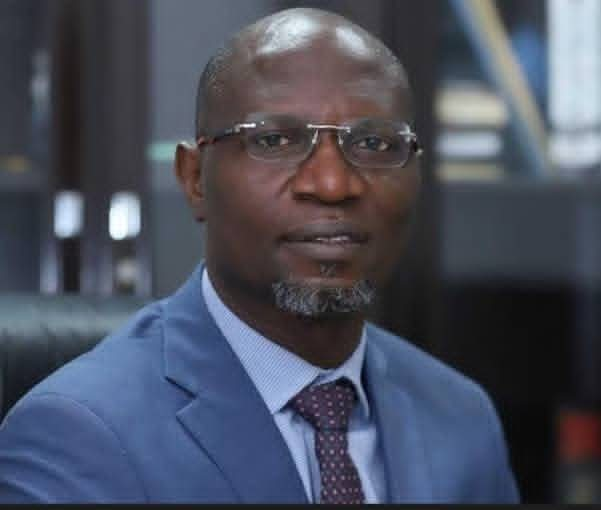
The Director-General of the Securities and Exchange Commission (SEC), Dr Emomotimi Agama, has urged Nigerian universities to explore opportunities in the capital market to finance infrastructure development, research and long-term institutional growth.
Agama said overdependence on tuition fees and government grants was inadequate for sustainable university development, urging institutions, particularly private universities, to adopt alternative financing mechanisms capable of attracting long-term investments.
He made the call on Friday while delivering the 16th convocation lecture of Achievers University, Owo, Ondo State, titled “From Grants to Growth: Financing Nigeria’s Universities Through the Capital Market.”
The SEC boss described the dependence on tuition fees as a “tuition trap”, arguing that annual income generated from students’ fees could hardly sustain the development of long-term infrastructure and other capital-intensive projects required by universities.
According to him, universities must distinguish between income and capital, noting that while tuition revenue could cater for recurrent expenditure, sustainable institutional expansion required access to long-term investment capital.
He explained that Nigeria’s capital market had the capacity to support university development through structured financial instruments, adding that the country’s pension industry, with assets exceeding N31 trillion, represented a significant pool of funds that could be mobilised for productive investments.
Agama identified four major financing instruments that Achievers University and other Nigerian universities could explore: professionally managed endowment funds, education bonds and sukuk, real estate investment trusts (REITs) for student accommodation, and innovation funds for research commercialisation.
On endowment funds, he explained that an endowment should operate as a permanent investment portfolio whose returns are used to support institutional activities while the principal remains protected.
He recommended that universities establish properly regulated endowment structures with independent trustees, licensed fund managers, clearly defined investment policies and annual publication of audited accounts.
He warned that an endowment that could be withdrawn or depleted whenever the institution faced financial difficulties was essentially a savings account rather than a sustainable investment fund.
On education bonds and sukuk, the SEC DG said universities could raise long-term funds through specially structured investment vehicles established around revenue-generating projects.
He explained that such arrangements would enable institutions to finance specific infrastructure without necessarily exposing their entire institutional balance sheets to financial risks.
He particularly highlighted sukuk as an asset-backed financing instrument that could support infrastructure development, noting that its structure requires identifiable assets and revenue streams to support investment returns.
Agama also urged universities to reconsider their approach to student accommodation, describing it as a viable investment asset rather than merely a component of institutional expenditure.
According to him, purpose-built student accommodation could attract private investors through real estate investment trusts, closed-ended investment funds or long-term concession arrangements with property developers.
He noted that students who could not secure accommodation on campus were already generating rental income for private landlords in surrounding communities, arguing that universities could capture part of this recurring revenue through properly structured accommodation investments.
The fourth financing option, he said, was the establishment of innovation funds to commercialise research outputs and intellectual property generated by university faculties, laboratories and research centres.
He observed that Nigerian universities were yet to fully exploit the economic potential of their research activities, adding that professionally managed innovation funds could provide researchers with opportunities to transform discoveries into viable businesses while giving universities ownership interests in the resulting enterprises.
Using existing Nigerian examples, Agama cited the experience of Afe Babalola University, which secured a 40-million-dollar, eight-year corporate loan from the African Development Bank to finance its expansion.
He also referenced the use of infrastructure bonds by Ekiti State and the recent announcement of a N50 billion sukuk by Kogi State, arguing that such examples demonstrated the possibilities of accessing structured financing within the Nigerian market.
However, he cautioned that access to capital market financing would depend largely on transparency, accountability and sound corporate governance.
He maintained that universities seeking institutional investment must demonstrate financial discipline through regularly published audited accounts, credible credit ratings, transparent investment policies and clear separation between institutional management and their promoters.
According to him, the capital market does not finance sentiment or institutional reputation but assesses the risks and financial credibility of prospective issuers.
He therefore urged university authorities to build institutions that could operate sustainably beyond the tenure or personal financial capacity of their founders.
Agama also clarified that his presentation of the financing options did not constitute an endorsement of any proposed transaction, stressing that the SEC would assess applications on their individual merits in accordance with established regulatory requirements.
Reacting to the lecture,, the Founder and Pro-Chancellor of Achievers University, Prof. Bode Ayorinde, expressed the institution’s ambition to become one of the leading universities in Africa, noting that access to adequate funding remained a major consideration in achieving the vision.
Ayorinde expressed confidence that accessing the capital market could reduce the cost of institutional financing and potentially ease the financial burden on students through increased investment and expanded enrolment capacity.
He commended the guest lecturer for the insights shared and assured that the university would examine the financing opportunities presented.
Earlier, the Vice-Chancellor, Prof. Omolola Irinoye, described the lecture topic, as one that would benefit the institution and academics alike.
The convocation lecture formed part of activities marking the university’s 16th convocation ceremony. The institution had earlier announced that 836 students, comprising 786 undergraduates and 50 postgraduate graduands, would receive their degrees on Saturday, October 31, with 98 undergraduate students earning first-class honours.



Discussion