


By Bodunde Tenabe
ONDO — The National Institute for Educational Planning and Administration (NIEPA-Nigeria) has forged a strategic alliance with the University of Cape Coast’s Institute for Educational Planning and Administration (IEPA) in Ghana, aiming to overhaul educational management across West Africa through digital innovation.
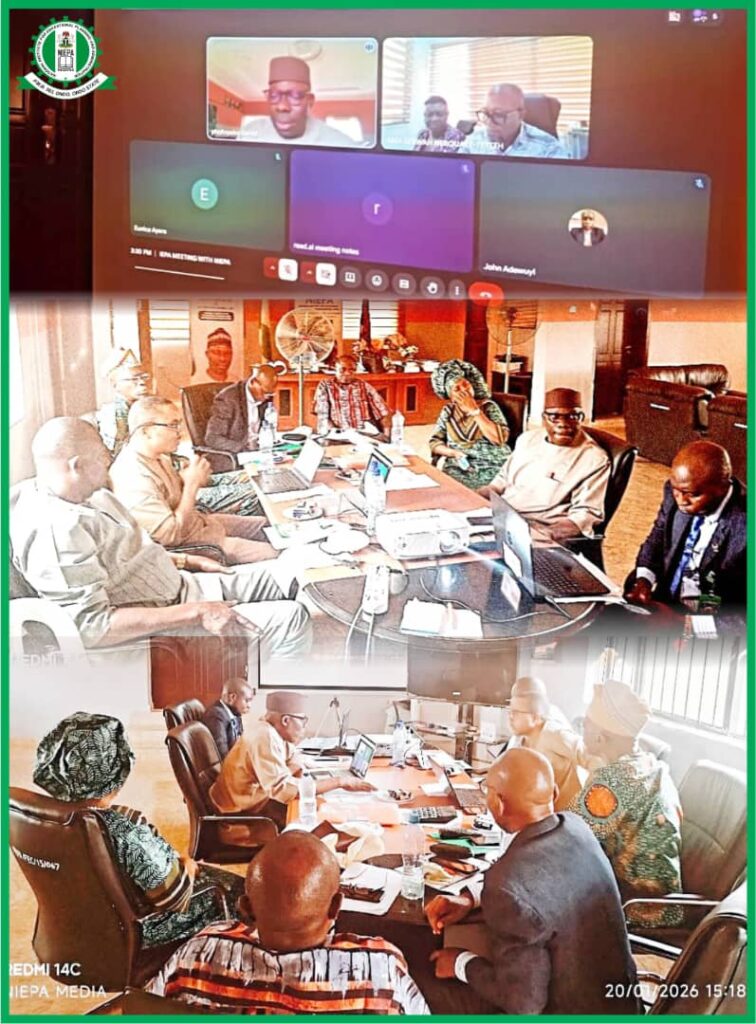
The partnership was solidified during a virtual high-level bilateral meeting held on Tuesday, January 20, 2026, which focused on adopting homegrown technology for quality assurance and strengthening Nigeria’s diplomatic footprint in regional education governance.
Acting Director-General of NIEPA, Dr. David Shofoyeke, described the collaboration as a cornerstone of the Institute’s rebranding efforts. He articulated a decisive shift from traditional teaching methods to “andragogy,” an adult-centered approach prioritizing experiential learning and simulation.
Shofoyeke noted that this pivot is critical for training mature education professionals to solve real-world administrative problems, a move that aligns with the “Renewed Hope Agenda” of President Bola Ahmed Tinubu and the policy direction of the Minister of Education, Dr. Tunji Alausa CON.
A major highlight of the summit was the presentation of NIEPA’s “Smart Quality Assurance” technology by Dr. Seun Yusuf, the Head of Statistics and Development.
Dr. Yusuf unveiled a suite of four proprietary applications designed to digitize school monitoring, teacher evaluation, and data reporting. The technology aims to eliminate data bottlenecks and enhance the integrity of education statistics.
The innovation sparked immediate interest from the Ghanaian delegation, led by IEPA Director-General Prof. Michael Boakye-Yiadom, who proposed a joint certification series that would leverage these Nigerian-developed systems.
The meeting attracted significant diplomatic backing, with the Secretary General of the NATCOM-UNESCO Office, Abuja, Dr. Wale Olagunju, in attendance. Dr. Olagunju endorsed the partnership as timely and consistent with UNESCO’s framework for regional cooperation, pledging technical support.
Similarly, Dr. Omogbemi Yaya, Managimg Director of the Regional Centre for Integrated River Basin Management (RC-IRBM)—a UNESCO Category 2 Centre, Kaduna—offered to share best practices for institutional management to ensure the venture’s success.
Giving further insight into the proceedings, NIEPA’s Media Officer, Bodunde Tenabe, disclosed that the meeting also addressed critical governance issues.
Specifically, discussions were led by Mrs. Ama Serwah Nerquaye-Tetteh, IEPA’s Deputy Director-General, regarding the operationalization of Nigeria’s statutory seat on the IEPA Governing Board.
This move is aimed at ensuring Nigeria’s voice is actively represented in the administration of the regional body.
Furthermore, Mrs. Nerquaye-Tetteh proposed the establishment of a chartered “African Institute for Educational Planners and Administrators,” envisioned as a continental regulatory body for educational leaders similar to professional associations in law and accounting.
The meeting concluded with a resolution to form a joint committee to draft a Memorandum of Understanding and a Joint Action Plan to formalize the initiatives.
Discussion