



Nigeria stands as a vast tapestry of ethnic diversity, woven together by shared histories, cultural plurality and deep religious consciousness. Long before colonial intrusion, communities across what is now Nigeria had evolved sophisticated traditional administrative systems that regulated social life. These indigenous institutions addressed corruption, theft, land disputes, marital conflicts, communal violence and a host of other societal challenges with remarkable effectiveness. Traditional rulers and religious leaders were not merely ceremonial figures; they were custodians of moral order and arbiters of justice.
Yet, despite this rich heritage, contemporary Nigeria finds itself grappling with a crisis of trust, particularly within its security architecture and media space. The question that must be asked is simple but unsettling: Quo vadis Nigeria? Where are we heading?
The burden of nation building does not rest solely on government institutions. It lies equally on the shoulders of citizens.
Patriotism is not a slogan; it is a responsibility. In this regard, the role of the media, especially in the digital age, demands urgent scrutiny. Quo vadis media reportage? Social media platforms, once celebrated as tools of democratisation and free expression, have increasingly become channels for misinformation, sensationalism and panic creation.
Too often, unverified reports are circulated with reckless abandon, fuelling fear and exacerbating already fragile security situations. False narratives about banditry, kidnapping and terrorism are sometimes amplified without due diligence. The consequence is predictable: heightened anxiety, erosion of public trust and, in some cases, the incitement of violence. The media must ask itself whether it is reflecting reality or manufacturing crisis.
This is not to absolve security agencies of responsibility. Indeed, another troubling question arises: Quo vadis Nigeria’s protectors? While many officers serve with integrity and courage, there are undeniable instances where “black sheep” within the system undermine collective efforts. Corruption, collusion and lack of accountability weaken the very institutions meant to safeguard citizens. The Yoruba proverb, “tí kúlé ọba pà ní tódé olè pà ní” (when authority within fails, disorder prevails without), aptly captures this dilemma.
The current administration under President Bola Ahmed Tinubu (PBAT) has signalled a determination to reform and sanitise national institutions. This “renaissance” must go beyond rhetoric. It requires a deliberate cleansing of systems, much like using a strong detergent to wash away entrenched decay. However, reform cannot be a one man project. It must be collective, sustained and uncompromising.
Nigeria is not lacking in resources. It is abundantly endowed, both materially and humanly. What remains scarce is institutional purity and moral discipline. Sabotage by a few must not be allowed to derail national progress. As argued in Imhanlahimi and Ajiteru’s work on democratic consolidation, weak institutions consistently undermine governance, particularly when there is insufficient political will to confront systemic challenges. Without strong institutions, even the best policies remain ineffective.
Citizens must also reflect inward. National transformation begins with individual responsibility. Every Nigerian has a role to play in addressing the insecurity conundrum. From the information we share to the attitudes we display, our collective actions shape the nation’s trajectory. No one is an island; the fate of Nigeria is a shared enterprise.
In tackling insecurity, pragmatism must prevail over sentiment. There is nothing inherently wrong with Nigeria collaborating with stronger nations in areas such as surveillance, intelligence gathering and counter terrorism. In an interconnected world, security is no longer a purely domestic affair. Strategic partnerships can strengthen capacity and enhance effectiveness, provided they are pursued with national interest at heart.
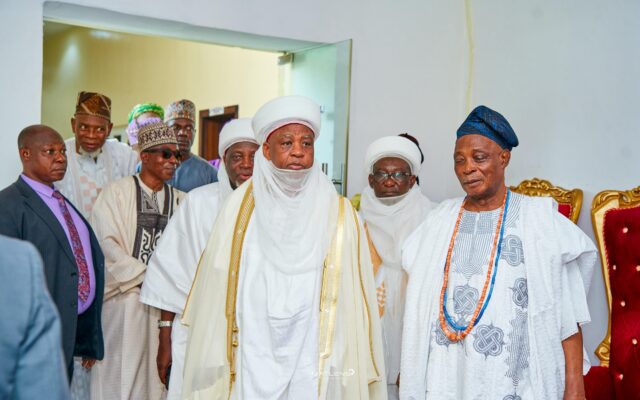
Religious leaders have also continued to emphasise the moral dimension of this crisis. The Sultan of Sokoto, as a leading figure in Islamic affairs in Nigeria, has repeatedly stressed the importance of mutual respect, peaceful coexistence and the sanctity of human life. No religion endorses killing, kidnapping or banditry. These acts are not only criminal but morally indefensible.
Ultimately, the search for purity in Nigeria’s security and media institutions is not an abstract ideal. It is an urgent necessity. A nation cannot thrive where truth is distorted and security is compromised. The time has come for a collective awakening, a renaissance grounded in accountability, integrity and patriotism.
The question remains: Quo vadis Nigeria? The answer depends on what we choose to do next.

Discussion