


By Our Correspondent
The governorship election holding in Osun State today, Saturday, August 15, 2026, is more than a contest for the control of the Government House in Osogbo. It is a major political test involving the popularity of the leading candidates, the performance of the incumbent administration, the strength of the opposition, the credibility of the Independent National Electoral Commission (INEC), and, perhaps more significantly, the preparedness of Nigeria’s electoral system for the 2027 general elections.
Osun, one of Nigeria’s off-cycle election states, goes to the polls with 2,339,233 registered voters, while 1,906,390 Permanent Voter Cards have been collected, representing about 81.5 per cent of registered voters. Voting is taking place across 3,763 polling units, 332 wards and the state’s 30 local government areas.
A Three-Horse Race
Although the election involves candidates from several political parties, political attention has largely centred on three major contenders: incumbent Governor Ademola Adeleke of the Accord Party, Bola Oyebamiji of the All Progressives Congress (APC), and Najeem Salam of the African Democratic Congress (ADC).
For Governor Adeleke, the election is fundamentally a referendum on his administration. The incumbent is asking Osun voters to renew his mandate and endorse continuity. His greatest political advantage is incumbency, which provides him with statewide visibility and the opportunity to campaign on his administration’s record.
However, incumbency can also be a burden. Elections often compel voters to move beyond campaign promises and ask a more direct question: Has the government improved my life? Therefore, public perception of governance, infrastructure, workers’ welfare, education, healthcare, social services and the general economic condition of the people will inevitably influence how the electorate responds to the governor’s bid for another term.
The APC candidate, Bola Oyebamiji, represents the strongest challenge to Adeleke’s re-election ambition. For the APC, victory in Osun would be politically significant because the party is seeking to reclaim a state it lost in the 2022 governorship election. The contest therefore presents an opportunity for the party to demonstrate that its political structure remains formidable in the South-West.
The ADC’s Najeem Salam introduces another important dimension. In a highly competitive election, a third major contender can alter the traditional arithmetic of a two-party contest. Even where a third candidate does not eventually win, his performance can affect voting patterns and determine where support that might otherwise have gone to one of the two leading parties is distributed.
Beyond Party Loyalty: The Question of Performance
The central issue in today’s election is likely to be the familiar contest between continuity and change.
Those satisfied with the direction of the Adeleke administration may see the election as an opportunity to consolidate its programmes. Those who believe the state requires a different direction may choose one of the opposition candidates.
The Centre for Democracy and Development has similarly framed the election around the competing questions of continuity under the incumbent administration and change represented by the major opposition challenge.
But Osun politics has historically demonstrated that party loyalty alone does not always determine electoral outcomes. Personality, grassroots networks, local political structures, economic realities and the ability of candidates to connect with ordinary voters can be just as important as the popularity of their political parties.
This makes today’s election particularly interesting. The real contest may not simply be Accord versus APC versus ADC, but rather performance versus promises, incumbency versus opposition mobilisation, and party machinery versus the personal popularity of candidates.
The PDP Factor and a Changing Political Landscape
One of the unusual features of the 2026 Osun election is the absence of the Peoples Democratic Party from the field, despite its historical significance in the state’s politics. INEC has maintained that the PDP will not field a candidate in the election amid legal disputes surrounding its participation.
This development has created a new political environment.
Governor Adeleke’s emergence as the Accord Party candidate means the election cannot be analysed strictly through the traditional APC-PDP rivalry that dominated Osun politics in previous election cycles. Instead, voters are confronted with a more fluid political environment in which candidate identity may carry greater weight than party identity.
That development could have implications beyond Osun. It may provide another indication of whether Nigerian voters are becoming more willing to separate candidates from political party labels.
The Turnout Question
One of the biggest factors that may determine the eventual winner is voter turnout.
While more than 1.9 million voters collected their PVCs, possession of a voter card does not automatically translate into participation. The final outcome will depend largely on how many eligible voters actually turn out at polling units across the state.
A low turnout could favour the candidate or party with the most efficient grassroots mobilisation structure. Conversely, a high turnout could create a more unpredictable outcome by bringing less committed or independent voters into the electoral equation.
For this reason, the battle today is not merely about who has the largest number of registered supporters. It is about who can successfully convert support into actual votes.
Security and Electoral Integrity
Security is another major issue.
Ahead of the election, authorities strengthened security arrangements, while reports indicated that thousands of security personnel, supported by aerial and technological surveillance, were deployed to maintain order.
The deployment is important because the credibility of an election depends not only on the counting of votes but also on the freedom of voters to make their choices without intimidation, violence or interference.
President Bola Tinubu has also called on INEC, security agencies and other stakeholders to ensure that the election is peaceful, transparent and reflective of the will of the people.
That statement places an additional spotlight on the conduct of the election. Nigerians will be watching whether electoral officials, security agencies, political actors and voters can collectively demonstrate that elections can be conducted peacefully and credibly.
A Major Test for INEC
INEC is equally under pressure to deliver a smooth election.
The Osun poll was moved from its earlier August 8 date to August 15, making today’s exercise another important test of the commission’s capacity to manage logistics, electoral technology and the collation of results.
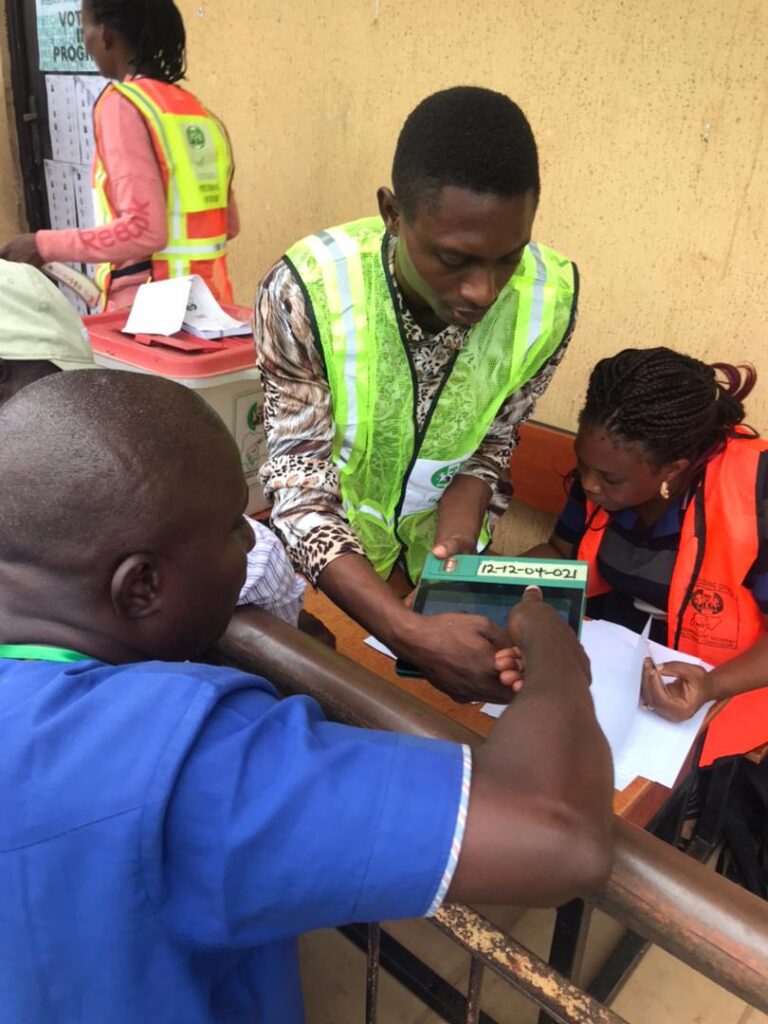
The credibility of the process will depend on several factors: the timely arrival of officials and materials, the effectiveness of voter accreditation, the conduct of polling officials, the uploading of results and the transparency of collation.
INEC has also assured voters that polling-unit results would be uploaded to the INEC Result Viewing Portal, making transparency in the transmission and verification of results a major area of public attention.
Any major logistical failure or controversy could overshadow the political contest itself. On the other hand, a peaceful and transparent election would strengthen public confidence in the electoral system.
Osun as a Political Signal Ahead of 2027
Perhaps the most important implication of today’s election lies beyond Osun State.
The poll is taking place just months before Nigeria’s 2027 general elections and is therefore likely to be interpreted as an early indicator of the country’s evolving political mood.
For the APC, a strong performance would boost confidence in the party’s political strength in the South-West. For Adeleke and the Accord Party, victory would demonstrate that incumbency and personal political appeal can overcome the dominance of established party structures. A strong ADC performance, meanwhile, could further strengthen arguments that Nigeria’s political space is gradually opening beyond the traditional dominance of the major parties.
The election is therefore not simply about who occupies the Osun State Government House. It could provide important clues about voter behaviour, party realignment and opposition politics ahead of 2027.
The Real Winner Must Be Democracy
As Osun people vote today, the most important expectation is that the process will reflect the genuine choice of the electorate.
The candidates will win or lose. Political parties will celebrate or challenge the outcome. But the ultimate measure of success will be whether Osun citizens are allowed to freely choose their governor and whether that choice is transparently reflected in the final result.
Today’s election is, therefore, a test of power, performance and political organisation, but it is also a test of Nigeria’s democratic institutions.
The candidates have campaigned. Political parties have mobilised. INEC has prepared. Security agencies have been deployed.
The final responsibility now rests with the voters.
Osun is deciding its next political direction, but Nigeria will also be watching for what the election reveals about the future of democracy and the road to 2027.



Discussion