


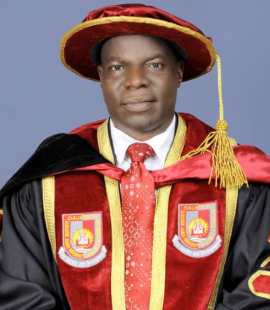
Sixty years is a momentous milestone in the life of an individual; but when the trajectory of that life intersects with the destiny of an institution, the celebration transcends personal longevity and assumes profound institutional significance. It becomes an occasion to interrogate leadership, evaluate the consequences of stewardship, celebrate demonstrable accomplishments, and contemplate the enduring architecture of a legacy. As Professor Temi Emmanuel Ologunorisa marks his diamond jubilee, the occasion offers a compelling opportunity to examine his stewardship of the Olusegun Agagu University of Science and Technology (OAUSTECH), Okitipupa, and the institutional reorientation that has characterised his administration since he assumed office as the university’s fourth substantive Vice-Chancellor in February 2022. His administration has pursued an expansive developmental agenda encompassing academic diversification, infrastructural renewal, digital transformation, research advancement, strategic partnerships, and institutional visibility, with particular emphasis on the opportunities presented by the Blue Economy. Having witnessed the university under successive administrations and subsequently served as a union leader within its workforce, I consider this assessment not merely a celebratory exercise but a reflection grounded in institutional experience. The aspiration encapsulated in the expression From a Sinking Citadel to a Celebrated Ivory Tower is, therefore, a statement about the distance an institution can travel when leadership, institutional purpose, and collective responsibility converge. As Aristotle’s conception of good governance reminds us, the worth of leadership is ultimately demonstrated through its contribution to the common good. Professor Ologunorisa’s sixtieth birthday thus invites an appraisal of both the progress recorded and the institutional foundations still requiring consolidation.
Professor Ologunorisa arrived at OAUSTECH with a formidable academic and administrative pedigree. A distinguished scholar whose intellectual contributions span meteorology, climatology, and environmental science, he had accumulated considerable experience in teaching, research, institutional administration, and community engagement before assuming the university’s highest executive office. His service at Osun State University, where he became its first professor and occupied key positions, including Head of Department, Dean and Provost, furnished him with valuable insights into the complexities of university governance. His research contributions, particularly in flood hydroclimatology and climate science, have attracted recognition beyond Nigeria, including the United States government’s Scholar of Extraordinary Ability Award in 2018. Such credentials established an intellectual foundation for the task ahead; nevertheless, the stewardship of OAUSTECH demanded more than personal distinction. He inherited an institution grappling with low student enrolment, accumulated salary arrears, outstanding third-party deductions and concerns surrounding the accreditation and sustainability of certain academic programmes, particularly in engineering. Having observed the institution before and during his administration, I recognise the significance of these inherited difficulties. They were structural challenges with consequences for institutional revenue, employee morale, public confidence, and the university’s capacity to fulfil its statutory mandate. The true test of a transformational leader is not the comfort of administering an institution already in equilibrium, but the capacity to confront inherited deficiencies, mobilise available resources, and establish a credible pathway towards institutional renewal.
The repositioning of OAUSTECH must, therefore, be understood against the interconnected realities of academic credibility, financial sustainability, physical infrastructure, and public confidence. Student enrolment is not merely a statistical indicator; it influences revenue generation, programme viability, campus vibrancy, and the university’s capacity to sustain its educational mission. Equally, salary arrears and unpaid deductions impose tangible hardship on employees, while accreditation uncertainty can undermine the confidence of prospective students, parents, employers, and professional bodies. In disciplines such as engineering, accreditation is especially consequential because it provides an essential framework for assuring academic standards and professional recognition. The administration’s response to these challenges has involved efforts to broaden academic opportunities, strengthen institutional capacity, and improve the university’s standing within Nigeria’s competitive higher education environment. The expansion from three faculties and schools to seven, alongside the diversification of academic offerings and efforts to improve student enrolment, represents an important dimension of this repositioning. Such growth, however, must be evaluated not by numerical expansion alone but by the extent to which it produces stronger teaching, credible qualifications, improved research capacity, and sustainable institutional development. A celebrated ivory tower must be more than an imposing collection of buildings or an enlarged academic structure; it must be an institution whose reputation rests upon demonstrable competence, academic integrity, and public trust. The enduring challenge, therefore, is to ensure that expansion is matched by adequate funding, qualified personnel, appropriate facilities, and rigorous quality assurance.
The diversification of academic programmes represents another consequential strand of OAUSTECH’s evolving institutional identity. Building upon its established foundations in science, agriculture and engineering, the university has broadened its academic reach into areas that include management sciences, earth sciences, nursing, and allied health sciences. This diversification creates opportunities for a wider constituency of students, enhances the possibilities for interdisciplinary scholarship and positions the university to respond more effectively to changing societal and professional demands. The development of postgraduate education and the emergence of the institution’s doctoral graduates are equally significant milestones, signalling the potential for a deeper research culture and more advanced knowledge production. Yet the distinction between an expanding university and an excellent university lies in the quality of the educational experience it delivers. Academic programmes must be sustained by competent lecturers, functional laboratories, relevant curricula, adequate student support, competitive research opportunities and transparent quality assurance. Accreditation concerns, wherever they persist, must receive decisive and sustained attention, particularly where professional recognition directly affects graduates’ prospects. John Henry Newman’s enduring reflections on the purpose of a university place intellectual formation at the centre of higher education; similarly, OAUSTECH’s long-term distinction will depend upon producing graduates whose knowledge, professional competence and intellectual discipline command confidence. Academic expansion is, therefore, a valuable achievement, but its ultimate justification lies in the quality of teaching, the credibility of qualifications, the relevance of research, and the contribution graduates make to society.
Infrastructure constitutes the material substratum upon which academic excellence and institutional prestige must be constructed. Lecture theatres, laboratories, workshops, libraries, digital facilities, and suitable student accommodation are not ornamental additions to a university; they are indispensable instruments of teaching, experimentation, innovation and intellectual development. Under Professor Ologunorisa’s administration, the development of lecture facilities, expansion of school buildings, and improvement of teaching infrastructure have featured prominently in the university’s developmental agenda. These investments matter because the quality of an educational environment directly influences the opportunities available to students and researchers. A properly equipped laboratory enables scientific inquiry; a functional lecture theatre facilitates effective instruction; and reliable information technology infrastructure connects the university community to an expanding global knowledge economy. Nevertheless, the prestige of infrastructure can not be measured by construction alone. Facilities must be completed to appropriate standards, equipped for their intended purposes, maintained consistently and supported by dependable electricity, internet connectivity and essential services. As the university expands its programmes and enrolment, infrastructure must evolve proportionately to prevent overcrowding, resource depletion and deterioration in the quality of learning. The aspiration to become a celebrated ivory tower is realised when physical development translates into improved academic performance, productive research, and a more conducive working and learning environment. The responsibility ahead is consequently twofold: consolidate the developments already undertaken and sustain investment in facilities that directly advance academic quality, research productivity, and the welfare of the university community.
One of the most strategically promising dimensions of OAUSTECH’s developmental trajectory is its orientation towards the Blue Economy. Situated within the coastal region of Ondo State, the university possesses a geographical advantage that could be translated into considerable intellectual, technological, and socioeconomic value. The Blue Economy encompasses the sustainable utilisation of oceanic, marine, and coastal resources to promote economic development, livelihoods, and environmental protection. Its practical domains include fisheries, aquaculture, maritime transport, coastal tourism, marine technology, and the conservation of aquatic ecosystems. For coastal communities across Ondo State, these fields are not abstract academic constructs; they intersect with livelihoods, food security, environmental resilience, and emerging economic opportunities. OAUSTECH is, therefore, strategically positioned to develop specialised expertise, support evidence-based policymaking and train professionals capable of responding to the challenges and opportunities of coastal development. Its research potential extends to coastal erosion, flooding, environmental degradation, fisheries management, mangrove conservation and the sustainable utilisation of marine resources. This agenda also presents opportunities to connect scientific research with the lived realities of coastal communities. Yet geographical proximity to the Atlantic coastline is an advantage, not an automatic guarantee of institutional leadership. Its full realisation requires specialised programmes, modern laboratories, sustained research financing, and productive partnerships with government, industry, and relevant research institutions. The university’s Blue Economy ambition will become a defining institutional asset when its scientific expertise produces practical innovations, skilled manpower, environmental solutions, and measurable benefits for Ondo State and the wider Nigerian economy.
In the contemporary knowledge economy, technological advancement and administrative efficiency have become indispensable attributes of a competitive university. Institutional modernisation demands more than the teaching of technology-related disciplines; it requires the deployment of digital systems that make university operations more efficient, transparent, and accessible. OAUSTECH’s efforts to strengthen digital processes, including student registration, result processing, access to academic information, and electronic transcript services, reflect the growing importance of technology in the delivery of higher education. Properly implemented, these systems can reduce administrative bottlenecks, improve records management, strengthen accountability, and provide students and graduates with more convenient access to essential services. They can also enhance management’s capacity for planning, monitoring, and evidence-based decision-making. Their effectiveness, however, depends on reliable infrastructure, cybersecurity, trained personnel, and consistent technical support. Equally important is the development of a research and innovation ecosystem capable of transforming institutional knowledge into practical solutions. Research centres, staff development, competitive grants, and collaborations with external institutions can strengthen scholarly productivity and elevate the university’s national and international profile. A technologically progressive university must, therefore, be judged not simply by the digital platforms it introduces but by the efficiency, accessibility and quality of services those platforms deliver. For OAUSTECH, sustained digital transformation offers an opportunity to entrench a culture of responsiveness and accountability, ensuring that technological investment becomes an instrument of academic advancement rather than a superficial symbol of modernisation.
Perhaps one of the most consequential dimensions of Professor Ologunorisa’s administration, viewed through the prism of my experience as a union leader, is its engagement with staff welfare and industrial relations. On assuming office, he inherited backlogs of unpaid salaries and outstanding third-party deductions, liabilities that had imposed considerable pressure on affected employees. His administration undertook to address these obligations through payments in accordance with stipulated schedules and arrangements reached with the relevant stakeholders. This was more than an accounting exercise: salaries sustain households, while deductions entrusted to an employer carry obligations that must be honoured. Their settlement consequently represented an important step towards restoring confidence and addressing inherited welfare concerns. Equally significant has been the administration’s approach to engagement with staff unions, characterised in my experience by accessibility, transparency, and dialogue. These attributes have provided a basis for constructive conversations about remuneration, conditions of service, collective agreements, and other legitimate workforce concerns. The HECUS ethos, encapsulated in the expression “A Breed Without Greed,” reinforces the values of integrity, selflessness, accountability and service that should underpin university leadership and union-management relations alike. Having experienced the university’s industrial relations environment across different administrations, I regard a willingness to engage organised labour as an important feature of responsible governance. Nevertheless, cordiality must not be mistaken for the complete resolution of every welfare issue. Sustainable industrial harmony depends upon honouring agreements, respecting collective bargaining, communicating honestly and translating commitments into verifiable outcomes. As the philosophical tradition of social justice teaches, institutional stability is strongest when authority is exercised alongside a genuine regard for the legitimate interests and dignity of those whose labour sustains the system.
A celebrated ivory tower must, therefore, be one in which intellectual ambition, infrastructural advancement, and administrative modernisation are inseparable from respect for the dignity, welfare, and legitimate interests of its workforce. The university’s true stature is determined not only by the reputation it projects to the outside world but also by the fairness, institutional confidence and sense of shared purpose experienced by those who teach, learn and work within it.
OAUSTECH’s aspiration for greater academic distinction also depends upon strategic partnerships capable of extending its reach beyond its immediate geographical and institutional boundaries. In an interconnected world, universities derive considerable value from collaborations that facilitate research, knowledge exchange, professional development, innovation, and access to international expertise. The institution’s efforts to cultivate academic connections, including engagements involving the University of Missouri–Kansas City in the United States and the Caribbean Maritime University in Jamaica, reflect an ambition to expand its collaborative horizons and strengthen its international visibility. Such relationships can be especially valuable in science, technology, climate research, coastal development and the Blue Economy, where complex challenges demand interdisciplinary knowledge and cross-border cooperation. Their significance, however, must ultimately be assessed through tangible outcomes: joint research, staff and student exchanges, collaborative programmes, shared facilities, capacity development and access to competitive funding. Memoranda of understanding and institutional agreements are important starting points, but they are not substitutes for implementation. Professor Ologunorisa’s scholarly standing and administrative experience provide a useful platform for developing such relationships, while the university’s responsibility is to ensure that collaborations remain active, adequately resourced and aligned with clearly defined institutional priorities. As the philosopher Francis Bacon’s celebrated observation that “knowledge is power” suggests, the value of academic engagement lies in the capacity to convert knowledge into productive action. For OAUSTECH, international partnerships will have lasting significance when they expand intellectual frontiers, strengthen institutional competence and deliver measurable benefits to students, staff and society.
Professor Ologunorisa’s leadership has attracted recognition beyond the immediate confines of OAUSTECH. In June 2025, he received the Southwest Outstanding Vice-Chancellor Award from Southwest Heralds Magazine in recognition of his leadership and contribution to institutional development. His election as President of the Nigerian Academy of Social Sciences in November 2025 further affirmed his standing within the wider academic community. These distinctions complement a career marked by scholarship, research and university administration, and they provide additional context for appreciating his professional journey as he reaches 60. Yet public honours, however gratifying, should be regarded as acknowledgements of service rather than the ultimate determinants of institutional success. The more enduring test lies in the structures, standards and systems that remain functional after a leader leaves office. For OAUSTECH, the most consequential legacy would be a university with stronger academic governance, sustainable research capacity, functional infrastructure, efficient administrative services, productive partnerships and a workforce whose contributions are respected and valued. The growth of academic programmes and student enrolment must be sustained by improved teaching quality and student support; industrial harmony must translate into practical welfare outcomes and the implementation of agreements; and academic expansion must be underpinned by credible accreditation and professional standards. These are not peripheral considerations but essential determinants of institutional reputation. In the final analysis, awards may immortalise a moment of recognition, but the durability of a leader’s legacy is measured by the institutional resilience, academic credibility and public confidence that survive beyond the applause.
As Professor Ologunorisa’s tenure approaches its scheduled conclusion in February 2027, succession becomes a matter of strategic importance in the continuing evolution of OAUSTECH. The Ondo State Government must recognise that the appointment of the next Vice-Chancellor will have far-reaching implications for the university’s academic future, institutional stability and public reputation. The process should be transparent, credible and consistent with the university’s governing laws and established procedures, with due regard for merit, competence, integrity and institutional needs. The next Vice-Chancellor must possess sound academic credentials, proven administrative capacity, strategic foresight and the ability to mobilise resources, strengthen research, protect academic standards and promote staff welfare. Equally important is the capacity to maintain constructive relationships with unions, students, government and other stakeholders. OAUSTECH requires a successor who understands its historical challenges, appreciates the progress made and possesses the intellectual and managerial disposition to confront unfinished business, including accreditation requirements, sustainable enrolment, research development and outstanding welfare concerns. Having witnessed the university through successive administrations, I believe continuity should not be confused with the automatic reproduction of any predecessor’s methods; rather, it should mean preserving demonstrable gains while correcting deficiencies and adapting to emerging realities. The transition should consolidate institutional progress, not subject it to avoidable disruption. In the spirit of Plato’s reflections on leadership and the common good, the selection of a university’s chief executive should be guided by the interests of the institution and the society it serves, rather than transient personal or political calculations. The best succession is therefore not a repudiation of the past but a principled bridge between achievements secured and possibilities yet to be realised.
The incoming administration must also appreciate that institutional transformation is a continuing process, not a completed project that terminates with the departure of an individual officeholder. The achievements and limitations of Professor Ologunorisa’s tenure should inform a coherent and evidence-based agenda for OAUSTECH’s next phase of development. Priorities must include the resolution of outstanding accreditation concerns, the maintenance of rigorous academic standards, sustainable student recruitment, improved financing, timely salary payments, staff development and continued investment in essential infrastructure. Equally important are postgraduate education, research funding, digital services and the development of solutions relevant to Ondo State and Nigeria. These objectives require coordinated commitment from the state government, governing council, management, academic and non-academic staff, students, alumni and host communities. Government support must be matched by institutional accountability, while university management must translate strategic aspirations into measurable targets, transparent implementation and periodic evaluation. The appointment of a successor is therefore far more than the filling of an executive vacancy; it is a decision with long-term implications for the university’s identity, sustainability and competitive standing. A credible selection process would signal a commitment to educational excellence, while a capable successor would inherit both a platform for further development and a responsibility to address unfinished business. Institutional continuity is most effective when it preserves what works, interrogates what does not and remains open to necessary reform. OAUSTECH’s future must consequently be determined by the imperatives of academic excellence, responsible governance and enduring public value, rather than the transient interests of individuals.
At 60, Professor Temi Emmanuel Ologunorisa has substantial grounds for reflection and celebration. His professional journey embodies decades of intellectual engagement, scholarly contribution and university administration, while his tenure at OAUSTECH has been associated with efforts to broaden academic opportunities, develop infrastructure, strengthen digital administration, cultivate research partnerships and improve engagement with staff and students. The title From a Sinking Citadel to a Celebrated Ivory Tower captures the aspiration to move beyond institutional limitations towards a university that commands greater confidence, recognition and respect. From my vantage point as a former union leader who witnessed the university under earlier administrations and during Professor Ologunorisa’s stewardship, the significance of this period lies in the combination of inherited challenges, remedial interventions and continuing developmental ambitions. The narrative, however, should not be mistaken for a declaration that every institutional difficulty has disappeared. Low enrolment, accreditation concerns and the continuing need to consolidate staff welfare, research capacity and infrastructure remind us that transformation must be demonstrated through sustained and measurable outcomes. The most persuasive account of progress is one that acknowledges achievements without obscuring unfinished responsibilities. Ultimately, OAUSTECH’s future will depend upon the consistency of its academic standards, the prudence of its financial management, the effectiveness of its governance and the collective commitment of its institutional community. As Professor Ologunorisa celebrates his diamond jubilee, the occasion is both a tribute to his service and a reminder that the most enduring measure of leadership is the capacity to leave an institution stronger, more credible and better equipped to serve future generations. A celebrated ivory tower is not constructed by rhetoric or personality alone; it emerges through purposeful leadership, responsible governance, academic discipline and the sustained collaboration of those committed to its success.
Happy 60th birthday, Professor Temi Emmanuel Ologunorisa. May this remarkable milestone usher in renewed wisdom, sound health, strength and greater accomplishments in scholarship, university administration and the advancement of education in Nigeria. May the efforts invested in OAUSTECH continue to yield enduring benefits for its students, workforce and future generations, and may the institution consolidate its achievements while courageously addressing the challenges that remain. May your legacy be strengthened by the continued growth, academic distinction and societal relevance of the university you have had the privilege to lead.
Temidayo O. Temola is the immediate past Chairman of the Senior Staff Association of Nigerian Universities (SSANU), OAUSTECH, Okitipupa.



Discussion